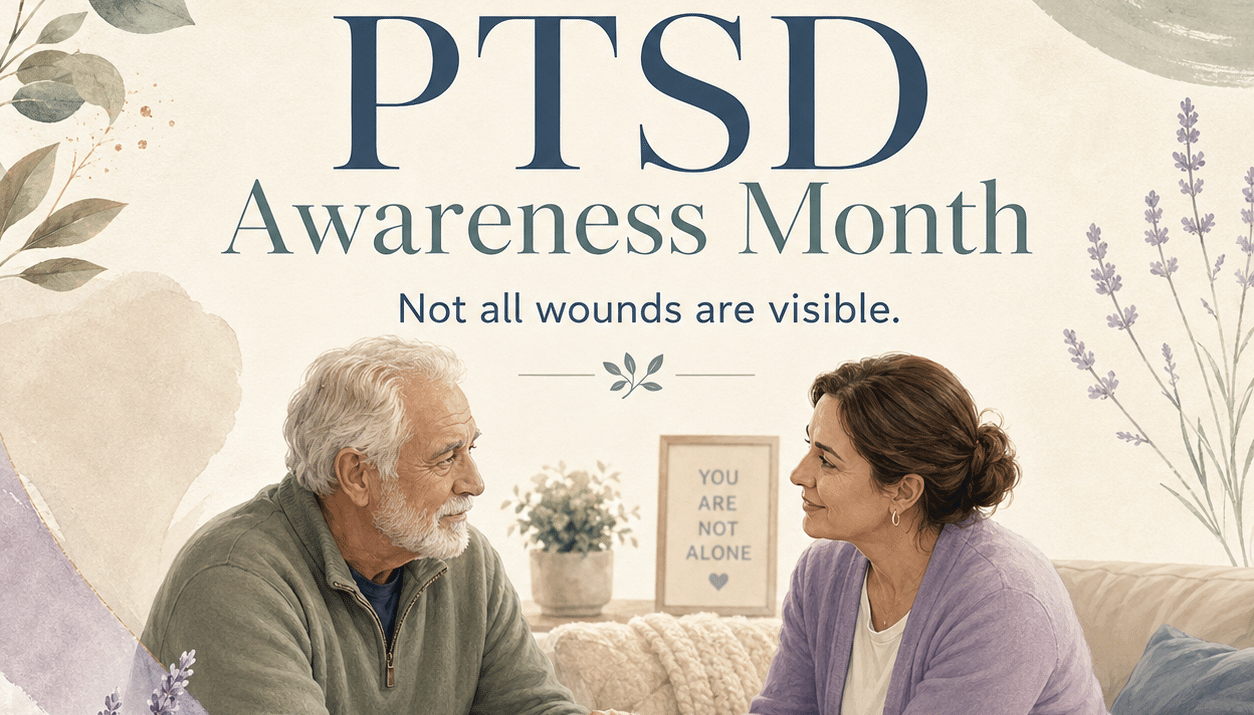
June is PTSD Awareness Month, a time to bring attention to the impact of trauma, the importance of support, and the reality that many people carry experiences others may never see. The VA’s National Center for PTSD recognizes June as PTSD Awareness Month and shares resources to help people better understand PTSD, treatment options, and support.
For older adults, PTSD and trauma can be especially complex. Some have lived through war, loss, abuse, medical trauma, grief, caregiving stress, or life experiences they were never encouraged to talk about. Many spent a lifetime being strong, pushing forward, and caring for others, even while carrying pain quietly.
Not all wounds are visible.
Sometimes emotional distress shows up as anxiety, isolation, irritability, difficulty sleeping, fearfulness, withdrawal, or changes in routine. Sometimes a major life transition, such as losing a spouse, moving from home, experiencing a fall, or needing more care, can bring old feelings back to the surface.
Often, these wounds have been dormant for years. Sometimes they have been kept private, even from close family members. A loved one may have spent decades carrying pain silently, and families may not always know the full story behind certain fears, preferences, or reactions.
That is why compassion and thoughtful guidance matter so much when working with seniors and families.
When I support a family through the senior living process, my role is not only to look at housing, safety, care needs, and medical support. It is also to understand the person. Their history, their comfort level, their fears, their routines, and the type of environment where they are most likely to feel safe and supported.
As part of my intake process, I take time to talk through details that can make a meaningful difference. Some seniors may do better in a smaller, quieter setting, while others may feel more comfortable in a larger, more active community. Some may have preferences around male or female caregivers depending on their personal history, wounds, experiences, or triggers. Others may need a living environment that feels calm, predictable, private, or easier to navigate emotionally.
These details are not small. They are often imperative to creating a successful support system and transition.
A move into senior living or additional care is deeply personal. It is not just about finding an available room or matching a budget. It is about honoring the whole person, including the parts of their story that may not be immediately visible.
Families may not always know what their loved one has carried. But they can create space for patience, listening, and support. With the right guidance, families can better understand what their loved one may need to feel safe, respected, and cared for during a major life transition.
This month is a reminder to look beyond what we can see on the outside and approach every person with care. Behind every senior is a lifetime of stories, sacrifices, memories, and experiences that deserve to be respected.
If your loved one is struggling with anxiety, grief, trauma, caregiving stress, or major life changes, you do not have to navigate it alone. Thoughtful, compassionate guidance can help families understand their options, ask the right questions, and take the next step with confidence.
Serving families throughout the South Puget Sound, including Thurston, Pierce, Kitsap, and South King County.
Related Posts

October 15, 2026
Breast Cancer Awareness Month: Awareness Has No Age Limit
Caring for the people we love also means remembering to care for ourselves. Every October,…
July 6, 2026
Brain Health, Veterans, and the Importance of Planning Before a Crisis
I have been trying to find the right words for Brain Health and Brain Awareness…